Offboarding Device Retrieval in Japan: A Practical Checklist
By Thinkers GK Team · July 6, 2026 · 7 min read
Summary: How Japan offices can reduce device loss and data risk during employee offboarding with retrieval tracking, access cleanup, wiping, and evidence-ready closeout.
Offboarding is where asset records are tested
Device records often look acceptable until an employee leaves, transfers, or works from a remote location. If ownership, location, shipping responsibility, and wipe status are unclear, the business can lose both hardware and confidence in the closeout process.
1. Tie device retrieval to account offboarding
Account deactivation, MFA reset, mailbox handling, SaaS access, and laptop retrieval should be coordinated as one workflow. Separating access cleanup from physical-device recovery creates avoidable gaps.
2. Confirm where the device actually is
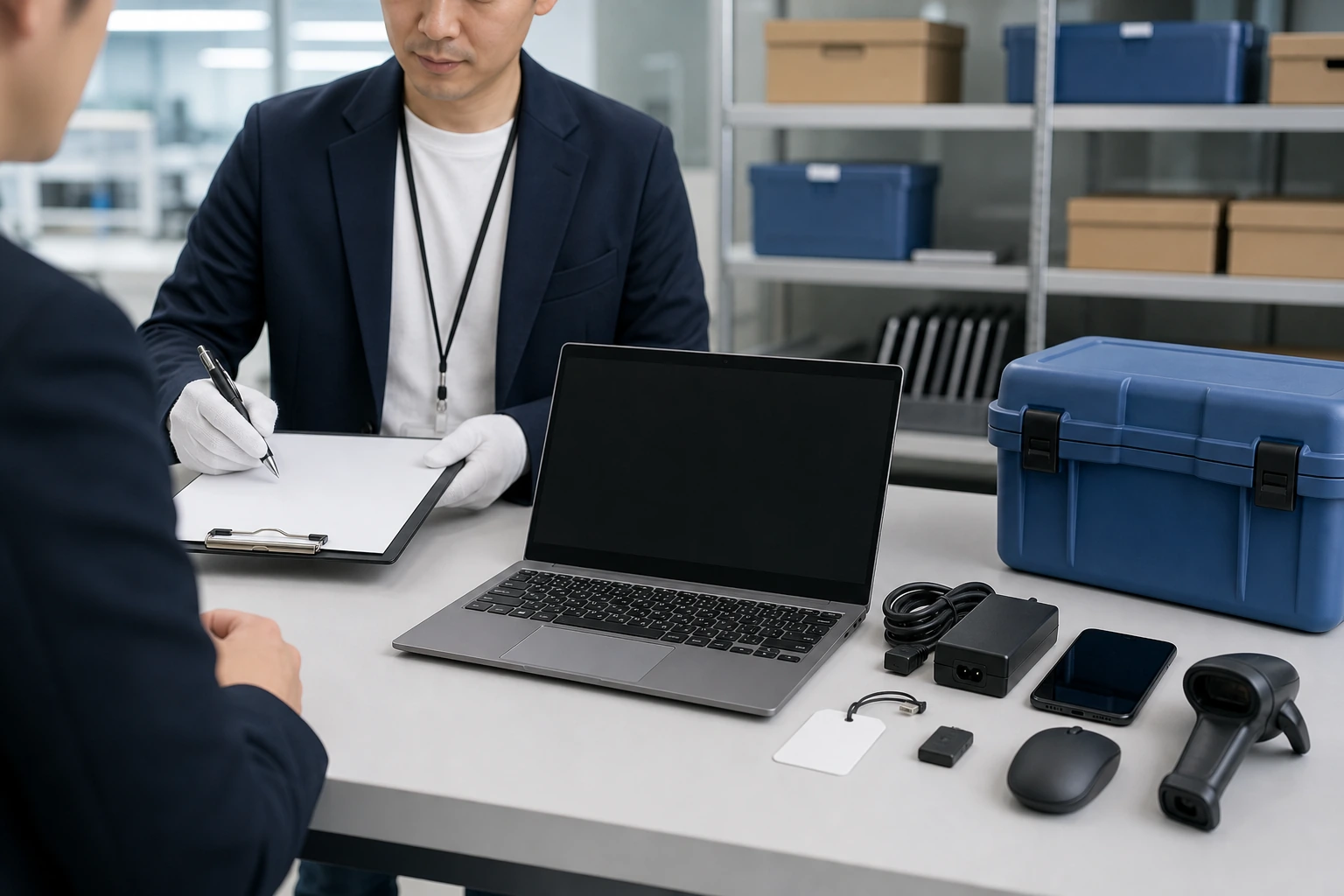
Do not rely only on the asset register. Confirm the user, location, serial number, peripherals, charger, and any storage media. For remote users, document shipping instructions and receipt checkpoints.
3. Preserve chain-of-custody evidence
Track who had the device, when it was transferred, how it was shipped or collected, and when it reached a controlled location. Photos, courier references, serial records, and handover notes make later questions easier to answer.
4. Decide wipe, reuse, resale, or disposal path
Some devices can be redeployed after secure wiping. Others should enter ITAD, buyback, recycling, or documented storage. The closeout route should be chosen from condition, age, policy, and data sensitivity, not convenience alone.
Where Thinkers GK fits
Thinkers GK can help Japan offices run offboarding retrieval as part of a wider device lifecycle lane: asset records, collection, local coordination, secure wiping, ITAD handoff, and headquarters-ready closeout notes.
FAQ
Can Thinkers GK retrieve devices from remote employees in Japan?
Yes, where the scope is agreed, we can coordinate retrieval, shipping checkpoints, and closeout records across Japan.
Can you wipe devices before redeployment?
We can coordinate secure wiping using appropriate tooling and document the result as part of the scoped engagement.
Can this be handled as a one-time cleanup?
Yes. Many teams start with a one-time retrieval or exception cleanup before deciding whether recurring lifecycle management is needed.
Next step
If your Japan office needs help with this topic, start with a short operational map: location, users or devices involved, current owner, timing pressure, and the evidence your headquarters expects. Thinkers GK can help turn that into a practical support, lifecycle, or ITAD scope.
Need Japan-side IT execution with clear records?
Tell us what needs to happen, which city is involved, and what evidence your team needs at closeout.